


Storytelling Is Bullshit. It's Time to Wake Up.

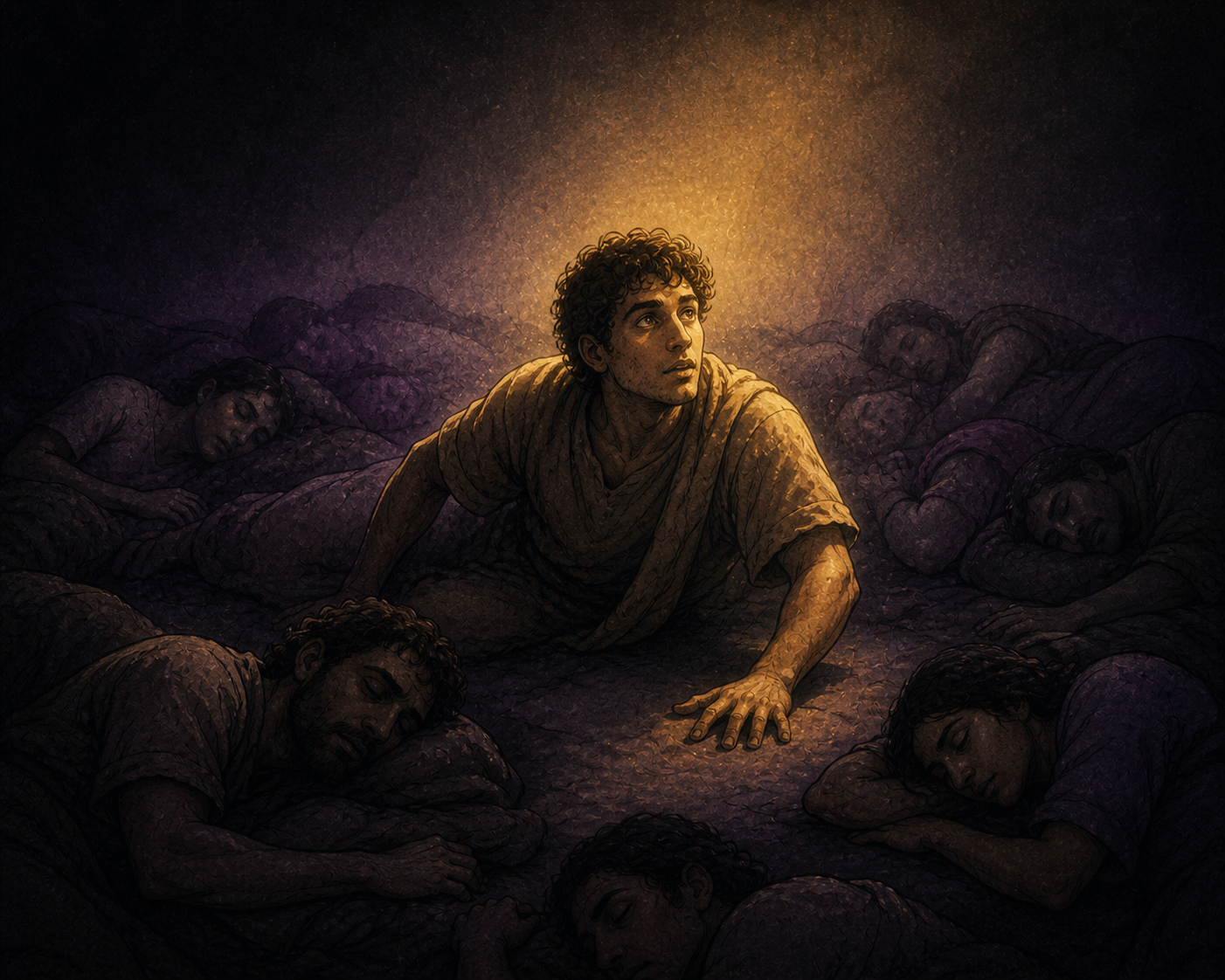
I was up late one night, 19 years old, contemplating suicide. It was dark. I was in a fog when suddenly the fog cleared. I felt overwhelming clarity. I understood everything. Then an image came to mind. I saw the planet and all the humans, all the beings, connected, like cells in one body, one brain. I thought to myself that maybe this was a reason to live. And that I, a storyteller, must serve it.
So I decided to write a story that’d have a massive, positive impact on humanity. I got my shit together and went to college. I studied creative writing. I told myself that I was a hero, and that I was going to save the world.
This is the beginning of something. Subscribe to follow where it goes.
And then I ended up in digital marketing. I wrote SEO landing pages. I copy-pasted keywords and HTML so car dealers could attract customers from neighboring towns.
I felt like a failure. A sellout. This wasn’t the promised land I’d sold myself.
But then I read an article. The Greatest Sales Deck I’ve Ever Seen. It talked about story. It made its author famous in Silicon Valley. It showed how narrative structure powered the strategies of the tech industry’s most transformative companies. And it hooked me.
I thought, strategic narrative sounds like the perfect job for me. So I set out on a journey. I’d master storytelling for business. I’d transform the world just like the legendary dropout unicorns of Silicon Valley. I had no idea what was in store for me.
15 years have passed since that first vision. 10 years since I started in strategic narrative. I’ve crafted a lot of stories. I’ve aligned teams across enterprise consulting, B2B software, EdTech, ClimateTech, and more. I’ve gone deep into the practice and study of story; deep into the psychology, the metaphysics, and the strategic theory, building my identity as a storyteller, drinking the “Storytelling” kool-aid until one day I just couldn’t do it anymore because I realized that…
Storytelling is bullshit.
Straight up. Philosopher Harry Frankfurt, in his widely-praised essay and book On Bullshit, defines bullshit as speech or writing produced without concern for the truth, aimed primarily at impressing or persuading an audience rather than accurately representing reality.
Which describes pretty well how we think about storytelling in business.
We think of storytelling as a tool for persuasion, and “persuasion is the centerpiece of business activity,” to quote Storytelling That Moves People—the 2003 article in the Harvard Business Review that first brought storytelling to the business world.
There’s a point in the article where screenwriting guru Robert McKee describes how storytelling works in business. He gives an anecdote about a medical startup CEO invoking his father’s death to raise capital. The interviewer asks, “Aren’t you really talking about exaggeration and manipulation?”
McKee replies, “No. Although businesspeople are often suspicious of stories for the reasons you suggest, the fact is that statistics are used to tell lies and damn lies, while accounting reports are often BS in a ball gown—witness Enron and WorldCom.” He then gave some storytelling advice before finishing his answer by saying that, “...I know that the storytelling method works, because after I consulted with a dozen corporations whose principals told exciting stories to Wall Street, they all got their money.”
So first he dodged the question, and then said that everyone who works with him gets their money. That right there is bullshit. He is storytelling about storytelling (notice, by the way, how interchangeable “storytelling” and “bullshit” are).
But it gets better.
In 2005, Seth Godin popularized storytelling in business with the book All Marketers Are Liars (later renamed to All Marketers Tell Stories). His thesis is that consumers lie to themselves to justify their purchases, and that the marketer’s job is to provide the story that enables the self-deception. “...No one buys facts,” he says. “They buy a story.” And then he says that “facts are irrelevant” and that “what matters is what the consumer believes.”
That is textbook bullshit. As Harry Frankfurt might say, storytelling, as defined in the business world, “is not germane to the enterprise of describing reality.” It is not coupled to the truth. Its singular goal is to persuade someone to take the action we want irrespective of whether or not it accurately represents reality.
And bullshit stories cannot produce lasting, generative transformation.
Stories can change the world.
But if you think that change happens through persuasion; if you believe in “Storytelling” as defined in the business world; if you think that stories are a Trojan horse tool to bypass your customers’ rational defenses and light up their neolithic brains so that they’ll do what you want, then you’ve missed the point.
Because real stories are for change. They’re for real, lasting, generative transformation. The kind that leaves you better. An evolution to your identity that leaves you better-adapted to a changing world.
If this is the type of transformation you seek for your customers; if you want to galvanize investors, employees, and other stakeholders behind serving it, then you cannot do it by bullshitting.
The only stories that can transform your customers are those that they’re already living.
Your customers are already living a story. They’re already at a threshold where the old way of being (the status quo) is no longer working, and in order to avoid an unacceptable consequence, they must transform.
That right there is a story. And it’s happening right now in real life.
Your job is to see that story—that evolution of your customers’ identities—already in progress, and then orient your entire market towards making it happen.
You must help customers evolve to face a changing world. And you do not do this by bullshitting them.
You do not make the story up. You do not do “objective” business work like product development or strategy, and then hire a storyteller to make up some persuasive bullshit.
Instead, you see clearly the real story your customers are living—their status quo identity, the crisis that’s breaking it down, and the new identity they must embody—and then orient every stakeholder in your company and beyond towards making that evolution happen.
Employees, investors, the media, industry partners, and of course, the customers themselves; every single stakeholder united behind one transformation.
We’ve seen this before. Those paradigm-shifting companies every storyteller likes to point to? They didn’t tell the story. They saw it. They didn’t persuade their customers of anything. They revealed the truth customers were already living, but couldn’t see clearly.
Apple didn’t convince consumers to think different. They spoke to those that already wanted to.
Salesforce didn’t persuade enterprises that on-premise software was dead. They showed it.
Figma is my favorite example. You won’t find anyone in the storytelling industrial complex talking about them because they didn’t do “Storytelling.”
They saw UX/UI designers stuck in an outdated identity. Just as they had been in the days of advertising and print design, designers were solitary creative geniuses working offline and alone, which was a problem because designing software requires collaboration. Executives, PMs, developers, and designers thinking and iterating together, continuously.
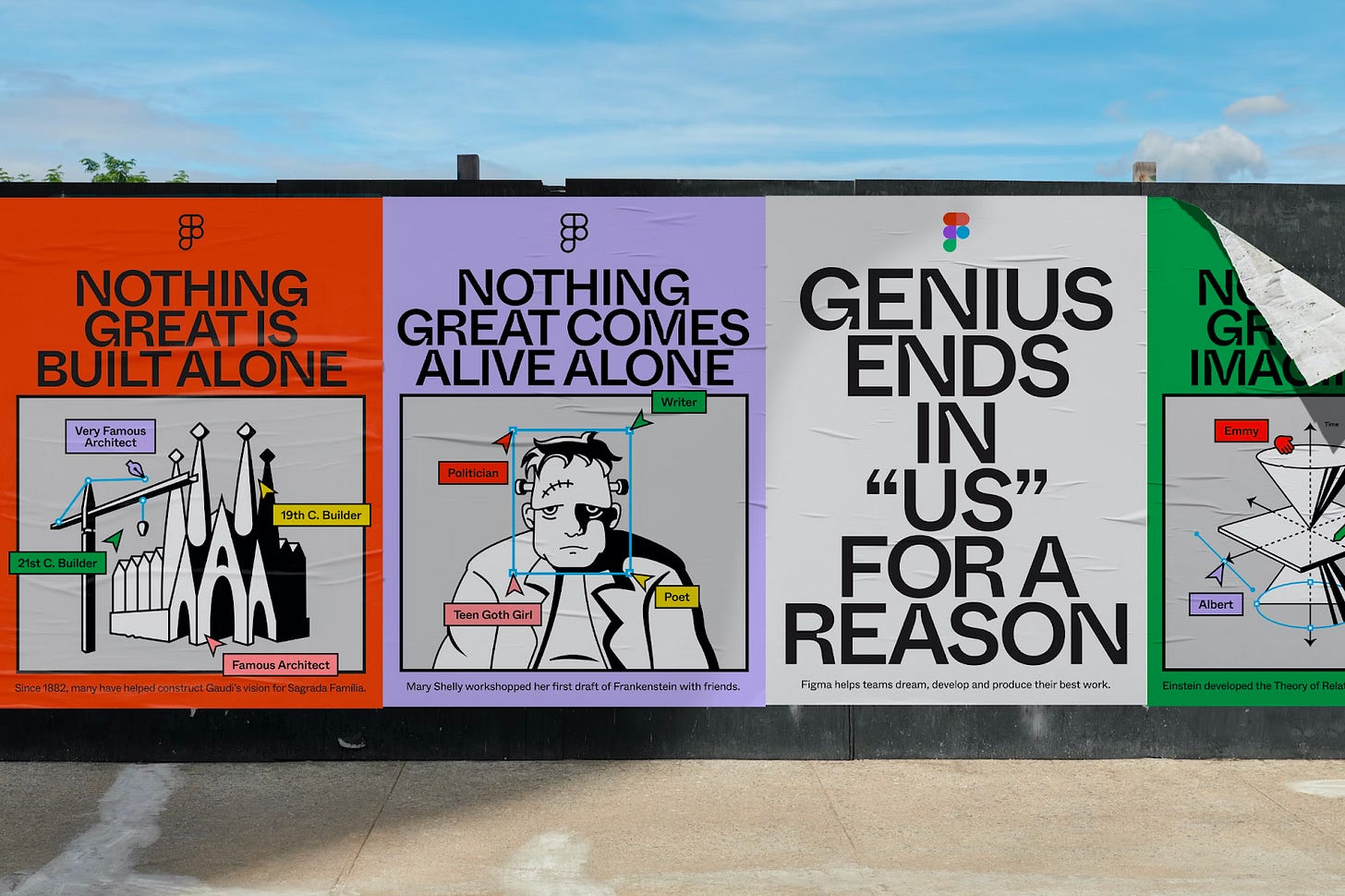
So Figma built a platform for a new type of designer—one that could orchestrate strategic collaboration—and aligned every aspect of their company, from fundraising to culture to go-to-market and beyond, behind enabling this new identity. It took them about 10 years to go from scrappy startup to industry standard, achieving 90%+ market share and a $47B IPO.
It wasn’t “Storytelling” that helped them do it. It was “Storyseeing.”
And “Storyseeing” is perhaps the rarest capacity in business.
It is a skill few founders train. And when we look at those that’ve pulled it off like Steve Jobs or Marc Benioff, we tend to resort to the great man of history theory; that these were just special humans with innate abilities, and that the rest of us can only study them in hope to gain some small shard of their brilliance.
Well that’s the first bullshit story we’ll need to dispel. Because actually, “Storyseeing” is learnable. By anyone.
But it requires unlearning a lot of bullshit. The deep kind of bullshit. The subconscious assumptions beneath how we think about and experience life.
But if we can do that; if we commit to a new way of seeing, we gain a type of strategic vision that few founders possess. The kind that allows you to see where your market is going before your customers can articulate it, and build the company that’s already there when they arrive.
Ready to learn?
I'm building this in public. Subscribe to follow the work.
Let’s start with the first step: how can you actually see stories?
I want to be fair to Robert McKee and Seth Godin. I think this is what they were actually trying to say.
But they were storytelling with their hands tied behind their backs. They were trapped, like the vast majority of modern society, beneath a metaphysics that guarantees that story can never be anything but bullshit.
McKee defines a story as something that expresses “how and why life changes.” It’s what happens when “the protagonist’s subjective expectations crash into an uncooperative objective reality.” There’s some valuable story truth in that definition, but let’s examine the assumption beneath it: that the objective is real, and the subjective is not.
Godin makes the same move. To him, there are facts and there are stories. They are fundamentally different things. He defines the stories we tell ourselves as “lies that make it far easier to live in a very complicated world.”
To both of these thinkers, stories cannot be real. They exist purely in the realm of the subjective, which is fundamentally not real. This means that our stories, our meanings, and our interpretations are essentially hallucinations that our nervous systems layer on top of objective reality.
Philosophers call this the subject-object split, and it has been a foundational assumption in Western thought ever since Renee Descartes famously declared, “I think, therefore I am.” It’s how most of us assume reality works, and it’s an assumption that blinds us. Why would we ever think to look for stories as real, observable patterns in reality if stories are not real?
But we can see that they clearly are. Think about how markets evolve. An old way of doing things stops working. The crisis builds. Something new emerges to replace it. The people inside it are forced to evolve. They experience the transformation.
Designers with Figma. Taxi drivers with Uber. Knowledge workers with Notion. Every disruption requires customer evolution, and these evolutions follow the same 5 act narrative structure you see beneath virtually every story:
- Act 1: something happens…
- Act 2: …which sets in motion a crisis…
- Act 3: …that forces the protagonist to evolve…
- Act 4: …which requires them to overcome obstacles…
- Act 5: …to be transformed.
This pattern shows up everywhere, like in scientific revolutions. In Thomas Kuhn’s book on The Structure of Scientific Revolutions, he articulates a pattern behind every major shift in scientific thinking from Copernicus and Galileo to Newton and Einstein:
Normal Science → Anomalies → Crisis → Revolution → New Normal
That right there is a narrative. It’s an evolution. And if we were to adapt it to the five act structure, it’d look like this:
- Act 1: Normal science. The paradigm is working. Everyone operates inside it without questioning it.
- Act 2: Anomalies accumulate. The paradigm starts failing to explain what’s happening. The crisis builds.
- Act 3: A revolutionary sees a new story that explains the anomalies. The field is forced to choose.
- Act 4: The paradigm war. The old guard resists. And as physicist Max Planck said, “science advances one funeral at a time.”
- Act 5: New normal. The new paradigm wins. A generation grows up inside it and can’t imagine the old world.
The key here: paradigm shifts are stories. We see it in science, and we see it in business too.
I saw one back when I was a marketer. In 2016, Hubspot made me a total fanboy. I told everyone I knew that “Inbound Marketing” was clearly the right way to do it.
Here’s how the indoctrination happened:
- Act 1: Marketing means interruption. Cold calls, banner ads, purchased email lists. Outbound is the only model anyone knows.
- Act 2: Buyers get sophisticated. They install ad blockers, ignore cold calls, and filter spam. The interruption model stops working. Marketers are losing access to buyers.
- Act 3: A new identity is needed: the Inbound Marketer. They don’t interrupt. They educate. They create helpful content. They earn buyers’ attention rather than forcing it.
- Act 4: HubSpot builds the platform for Inbound Marketing. Blog, SEO tools, CRM, marketing automation, etc. Then they spend years teaching the new methodology through content and education programs.
- Act 5: Inbound becomes the dominant marketing paradigm in B2B.
“Inbound Marketing” felt like a cult. I remember asking their sales rep about sending cold outbound emails through their platform. He replied, “If you send spammy cold emails to people that haven’t opted in to hear from you, you’re not a Hubspot customer.”

“Inbound Marketing” was an identity. And anyone who saw the same story that Hubspot did wanted to be a part of it.
Now, there is plenty of room for nuance and critical examination. How deep did that paradigm shift really go? Was it really generative? How long did it last, and why? The reality is actually quite complex.
But the point for today is this: when we stop philosophically gaslighting ourselves and denying that our lived experience has any reality to it whatsoever, we open ourselves to see that story is the pattern behind customer and market evolution. It is not bullshit we make up. It is not persuasion.
When you communicate the story you’ve seen to customers; if it’s the true story they’re actually living; and if they really are in crisis and can’t see the way forward, that’s when the story lands like truth. That’s what opens the door for you to lead them towards transformation.
But real transformation requires more than just telling the story. You have to be the story.
Your sales deck won’t transform customers. Nor will your fundraising pitch, your website, your TechCrunch features, or any other single touchpoint. Not even your product.
What can transform customers is a coherent customer experience where every single touchpoint along their journey serves their evolution. That means employees, investors, operations, company culture, the product roadmap, the business model, and more are aligned behind the customer’s evolution.
That kind of alignment is exceedingly rare. And the number one reason why?
Bullshit.
Particularly, the bullshit we tell ourselves. Self deception. Delusion. It’s ubiquitous and each of us knows it. We are constantly storytelling to ourselves.
This was Seth Godin’s point. Humans are storytelling factories. Companies simply provide the story that enables the self deception.
Well the problem with that paradigm; with structurally decoupling story from reality and making it all about persuasion is that you expose yourself to your own persuasion. You lose the ability to see clearly. You cloud your sensemaking with biases and beliefs that some aspect of your identity needs to be true.
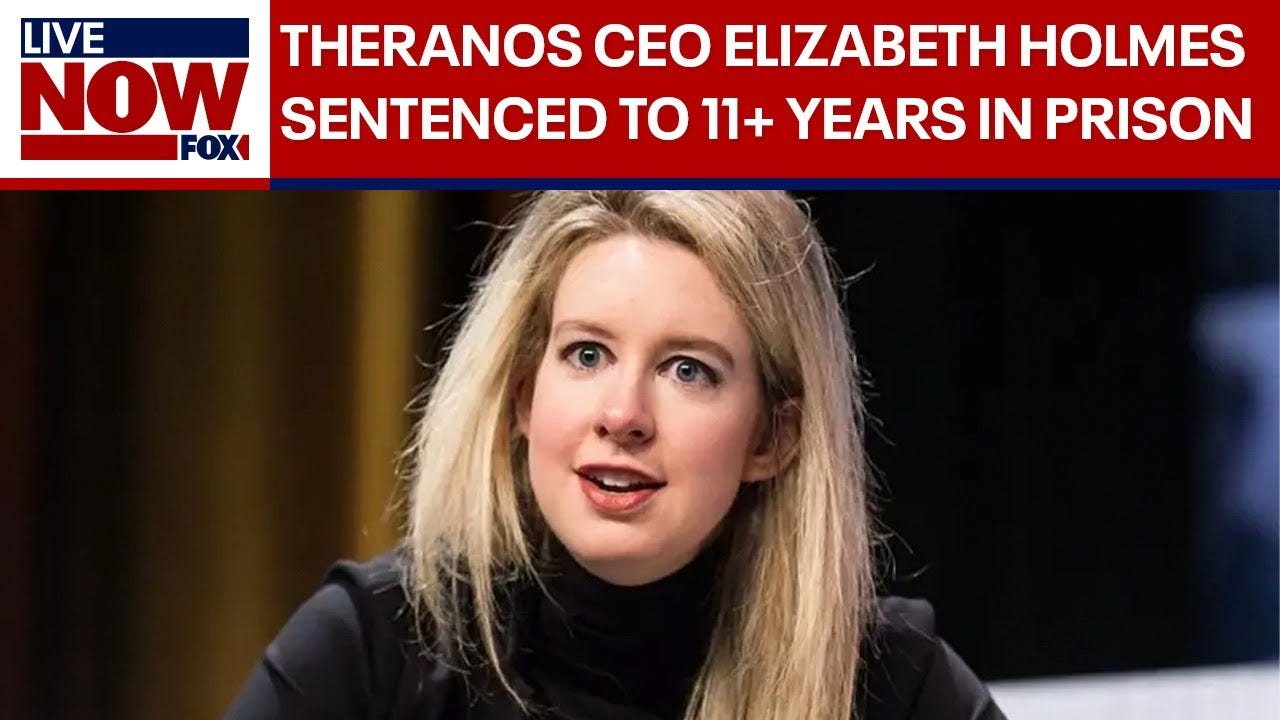
Remember Elizabeth Holmes? From Theranos? She’s a great example. She told a story so compelling that Walgreens, Safeway, and a cadre of sophisticated investors believed that Theranos would revolutionize blood testing. She’s now spending 11 years in prison for misleading patients and defrauding investors of $700M.
Then there’s Adam Neumann from WeWork. He burned $47B of investor money on the story that WeWork, a desk rental company, was “elevating the world’s consciousness.”
These founders bought their own bullshit, and thus decoupled themselves from reality, and thus created catastrophic misalignment across their ventures. They were regarded as fantastic “Storytellers.” They persuaded their way to billions in funding, and in some cases from some people, near-fanatical belief.
But lasting alignment requires lasting truth. It requires your story to be a faithful representation of reality. And as Frankfurt might say, you can’t do this if you’re “Storytelling.”
I should know. I’ve lived under the weight of my own bullshit my whole life. That heroic myth I told of myself at the beginning of the article? The one with messianic, “Evan-will-save-the-world” overtones? Bullshit.
Not because any of it was untrue, or unfaithfully rendered. I did have the vision. I did believe that I’d be a hero. But here’s the bullshit: I needed to be.
Every single day on my way home from kindergarten, I ran home from the bus stop to watch Star Wars. Episodes IV through VI on a loop. I loved it. I needed it. Something deep in my boyish heart demanded it.
Star Wars was a paradigm shift. It introduced Joseph Campbell’s Hero’s Journey to Hollywood. It launched the blockbuster era, spawned a $10.3B franchise, and proved to Hollywood that a mythological framework based on indigenous initiation rites was a repeatable formula to sell blockbuster after blockbuster.
Hollywood’s Hero’s Journey then inundated modern culture. It indoctrinated our youth. It amplified an archetype that’s become endemic, and is beneath so much of the misaligned bullshit we see everywhere in the world today.
The Hero. The special one. The one who’s going to save the day and be rewarded.

Generations of us have learned that this is how we prove our worth. This is how we tell the world that we belong. This is how we make our lives worth living.
And it’s bullshit. It’s not true. It blinds us to anything that doesn’t confirm it. It obfuscates any reality where we are not the hero, even when that reality is knocking on the door.
Like when Elizabeth Holmes’ blood testing tech patently did not work. Like when employees complained, federal regulators scratched their heads, and the media asked questions. Even when the truth closed in around her, Elizabeth Holmes couldn’t see any reality where she was not the next Steve Jobs.
Did Adam Neumann believe he was the messiah? Did he believe that WeWork would “elevate the world’s consciousness?” Did he commit so totally to that bullshit identity with his long flowing hair, his barefoot walking, and his kibbutz mythology, that he got $47B of venture capital to believe it too?
We might look at these as extreme cases. Fraudulent. Like something we’d never do.
But haven’t we all deluded ourselves at some point trying to be something bigger? Haven’t we all tried to tell a story that we needed to be true, even as reality pushed back?
I know the job of a founder is hard. Fucking hard. The weight of “change-the-world” hero expectations smashed violently against a market that doesn’t care.
Or maybe a market that does. And then all the validation, the elation, the irrational to-the-moon exuberance goes to our heads, and suddenly there’s nothing we can’t do. We’re destined for greatness and everyone knows it.
How do we see through that bullshit? The answer I’m learning goes deep. Extremely deep. All the way back to the beginning where some part of ourselves became misaligned with truth. That misalignment then cascaded into another, and another, and another misalignment until suddenly we found ourselves adults, struggling to align, struggling to see a coherent story in our life and world.
There is a lot I still don’t know. But I do know that real, generative, lasting alignment in our markets starts by aligning ourselves.
And that inner alignment is what allows us to lead the transformation.
I want to tell the story of a founder you might know of; one who recently hit a $47B IPO who, from what I can see, did it by exemplifying everything I’ve been talking about.
Dylan Field of Figma. He sold design technology that was based on collaboration. And before Figma launched publicly in 2016, he did not know how to collaborate.
It’s well documented. For much of Figma’s 3 year stealth period, right up until they started their first go-to-market activities, Dylan Field was a micro-manager. He acted like a creative genius—the same archetype that prevented UX/UI designers from collaborating.
“A designer might say, ‘Hey, I think we should do this,’” said Sho Kuwamoto, Figma’s Head of Product. “...and Dylan would say, ‘You know what, I think those corners are a little bit too round, let’s make them a little more square.’”
This frustrated the team. It slowed progress. It drove some employees to quit.
So the senior team staged an intervention. The investors sat Dylan down. They told him, “You’re going to have to adapt and change.”
And he did. He hired help. He set his ego aside. He learned to be less of a creative genius—less of a hero—and more of a strategic collaborator. And this transformation set off everything that followed.
Strategic collaboration permeated Figma’s culture. It shaped how their team worked. It defined their customer relationship.
They co-created Figma with their customers, and this relationship defined every aspect of their go-to-market from public launch to monetization to scaling into the enterprise and beyond. It guided marketing, sales, customer support, the product roadmap, and more.
They dedicated 20% of engineering time to support. They were obsessive about collecting feedback. They hired designers to do marketing about helping designers. They co-created their organization pricing with organizations. They launched Figma Community (like a GitHub for designers) so that the design community could co-create amongst itself.
They embodied the “Strategic Collaborator” archetype. They created a coherent experience. They led designers into a new way of working that was such a paradigm shift, and conferred such a strong competitive advantage, that design orgs the business world over were all but forced to adopt it.
This required near-absolute alignment sustained through rapid growth and massive complexity in order to transform how design is done. Dylan Field and team saw a story. They embodied it. And then they led a $47B transformation.
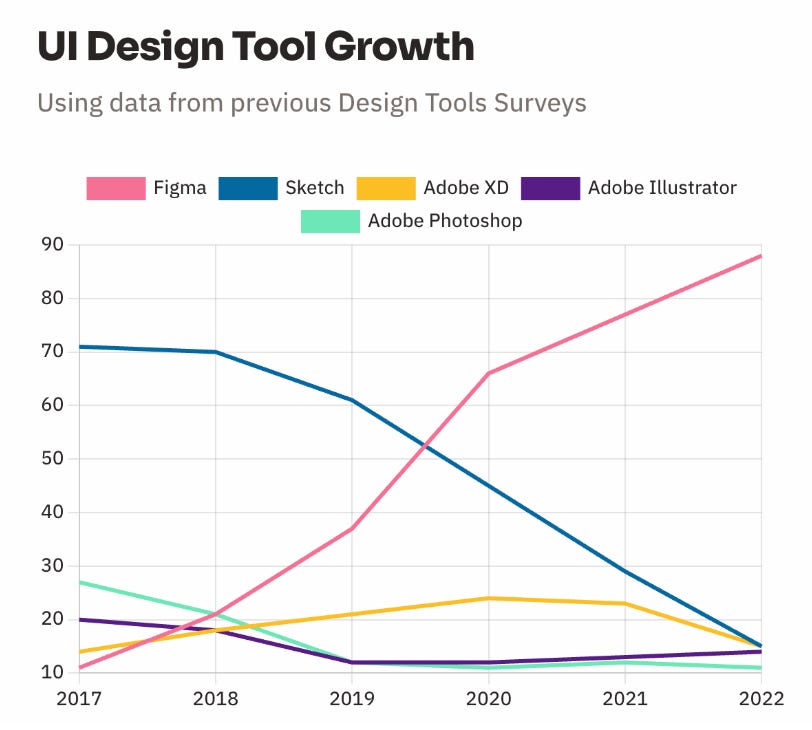
See the story. Be the story. Lead the transformation. That’s what’s possible when you step out of the bullshit and see stories for what they truly are.
(Detailed Figma case study dropping soon).
We now live in The Bullshit Economy.
Have you heard about “Storytelling?” And how the business world is suddenly obsessed with it?
2025 saw a massive spike in search interest. Companies across the economy are scrambling to hire storytelling talent. Executives are now using the word 219% more on earnings calls than in 2015.
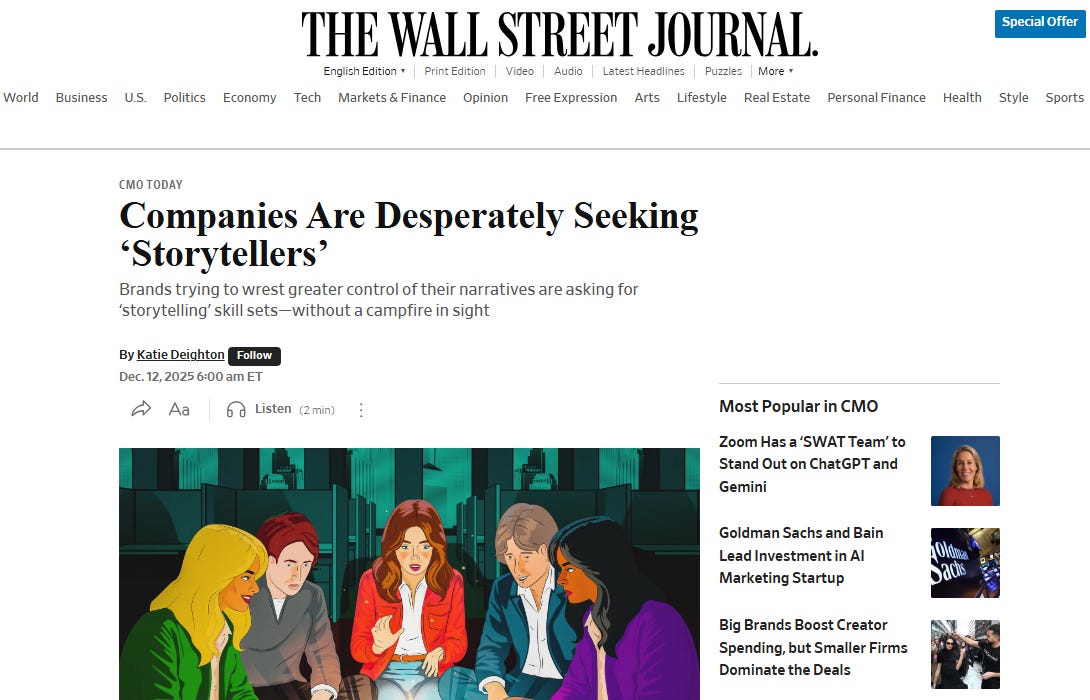
Why the sudden spike?
Because nobody trusts each other anymore. Disinformation. Polarization. A profound lack of trust in CEOs, journalists, and government. The 2025 Edelman Trust Barometer shows what all of us already know: that bullshit is ubiquitous. And now, we don’t know who to trust or what to believe.
“Storytelling” is the business world’s answer. We’re going to cut through the AI slop by telling stories that make our brands “authentic” and “human” and “relatable.”
Which is insane. We’ve already storytold the world so hard that nearly two-thirds of people don’t trust their leaders. And our answer is to storytell them better. That’s a race to the bottom. A zero-sum game. A slide to a future that nobody wants where nobody wins.
And we’d prefer a future that everybody wants where everybody wins.
And so what if we stopped telling bullshit stories and started seeing the real ones? What if we stopped seeing ourselves and the universe as machines, just at the moment that we’ve built a better one, and started honoring life and humanity as the treasures they are?
What if we gave birth to The Evolution Economy?
I don’t claim to have all the answers, but what the StorySeers of both business and beyond have shown us is that when we align with the evolution that’s already trying to happen, we can transform the world.
Because the world wants to evolve. The universe wants to evolve. From the big bang to hydrogen gas to a thousand generations of stars to stardust to planets to microbes and plants and animals and humans and perhaps, just over the horizon, one interconnected, coherent planetary organism and beyond.
We don’t have to do it ourselves. We don’t have to be heroes. We don’t have to perform or be successful or do great things just to prove that we deserve to exist.
We are parts of a story. Unique parts of the biggest story, with unique gifts and unique roles to play. We are each cosmically significant, and the only evolution we need to make is to see that as truth.
I was 19 years old when something called me to recognize that. 15 years later I think I’m finally starting to understand.


